
Login
Login
- Popular Categories
- Shop By Brand
- Tool Accessories
- Air Compressor
- Hand Tools
- Laser Levels
- Mechanical Workshop
- Pressure Washers
- Welding
- Chainsaws
- Lawn Mowers
- Whipper Snippers
- Categories
- Adhesives & Sealants
- Air Tools
- Diamond Tools
- Fans
- Fasteners
- Generators
- Ladders
- Lubricants & Chemicals
- Power Garden
- Safety Equipment
- Scaffold
- Silica Dust Solutions
- Storage
- Test - Measure - Locate
- Transportation & Lifting
- Vacuum & Dust Extractors
- Water Pumps
Mechanical Workshop / Lifting Equipment / Glass & Stone Suction Lifters
Glass and stone suction lifters are specialised handling tools designed to lift, position and transport large, smooth surface panels with greater control and safety. Commonly used for automotive glass, body panels and heavy stone slabs, these lifters rely on powerful vacuum suction pads or cups to create a secure, non-marking grip on flat or gently curved surfaces. By distributing weight evenly and maintaining consistent suction, they help technicians move heavy or fragile materials with confidence reducing strain, minimising the risk of drops, and protecting surfaces from chips, cracks or damage during handling and installation.
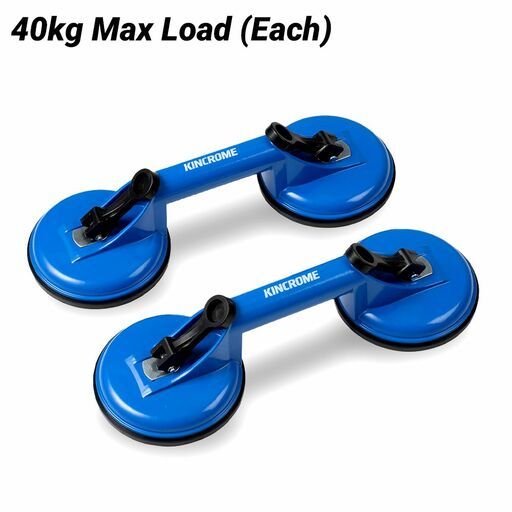
Why Proper Suction Lifters Matter
Using purpose-built suction lifters is essential for safely and accurately handling heavy glass, stone and other smooth materials. These tools significantly reduce the risk of injury, product breakage and surface damage by providing a secure, evenly distributed grip during lifting and positioning. In automotive glass replacement or bodywork, suction lifters allow for precise alignment and controlled movement, making fitting and installation tasks faster, safer and more consistent. Stable positioning also helps prevent slips that can lead to costly rework or damaged components.
Key Features & Functional Details
- Number and size of suction pads: Multiple or larger pads distribute weight more evenly and improve stability for heavier or wider panels.
- Material & build quality: Durable housings and high-quality rubber or polymer cups provide long-term reliability, weather resistance and consistent suction.
- Maximum load capacity: Always choose a lifter rated above the weight of the material being handled to maintain a safety margin.
- Handle design & ergonomics: Comfortable, non-slip handles support better control during lifting, positioning and installation.
- Vacuum creation & release: Simple lever mechanisms or pump systems allow quick, secure attachment and controlled release.
- Pressure indicators or pumps: Visual indicators help confirm adequate suction has been achieved before lifting.
- Surface compatibility: Some lifters are better suited to flat surfaces, while others accommodate gentle curves or awkward panel shapes.
- Team or solo use: Designs vary from single-hand lifters to multi-handle models suitable for two-person operation on larger panels.
Safe Use & Care Guidelines
- Always inspect surfaces for cleanliness, smoothness and dryness before applying suction cups.
- Avoid using suction lifters on rough, porous or contaminated surfaces that may compromise grip.
- Check that all suction pads have formed a firm seal before lifting.
- Use steady, coordinated movements when manoeuvring heavy or fragile panels.
- Release vacuum slowly and deliberately to prevent sudden drops.
- Clean suction pads after use and inspect them regularly for wear, cracking or loss of flexibility.
- Store suction lifters in a clean, dry, protected area to prevent pad deformation or damage.
Why Buy Glass & Stone Suction Lifters from Sydney Tools
Here at Sydney Tools we offer a range of glass and stone suction lifters designed for automotive glass, body panels and other smooth materials. We also offer an extensive range of other lifting equipment and protective covers for all types of materials. Each product is listed with the adequate load capacity and pad configurations to help you choose the best one for your job. Whether your after work benches or any mechanical equipment, Sydney Tools is your one stop shop with competitive pricing, reputable brands, and expert advice.
Frequently Asked Questions (FAQs)
How long can a suction lifter safely remain attached without losing holding strength?
This depends on the lifter design, surface condition and environment, but seals should always be checked regularly during use.
What should I do if a suction lifter slowly loses grip during a lift?
Lower the load immediately, recheck surface cleanliness and reapply suction before continuing.
Are there differences in performance between single-cup and multi-cup lifters for the same load?
Yes, multi-cup lifters typically provide better load distribution and stability, especially for larger panels.
Can suction lifters be safely transported while attached to a surface?
They are intended for lifting and positioning rather than transport; always follow manufacturer recommendations.
How do I test a suction lifter’s seal before committing to a full lift?
Apply the lifter and gently test resistance or use built-in pressure indicators to confirm a secure seal.
What environmental factors most commonly reduce suction effectiveness?
Dust, moisture, temperature extremes and uneven surfaces can all affect suction performance.
Can suction lifters leave marks or residue on sensitive surfaces?
Quality suction pads are designed to be non-marking, but surfaces should always be clean and checked first.
How often should suction pads be replaced under regular workshop use?
Replacement frequency depends on usage and conditions, but pads should be changed at the first signs of wear or damage.
Are suction lifters suitable for temporary positioning as well as full lifting?
Yes, they are commonly used for both temporary positioning and controlled lifting tasks.
What storage practices help prevent suction cups from deforming over time?
Store lifters with pads relaxed, away from heat and direct sunlight, in a clean, dry environment.
Ready to Handle Panels with Confidence?
Move glass and stone more safely and with greater control. Browse the full range of glass and stone suction lifters online, or visit your nearest Sydney Tools store to compare options and get practical advice for your next job.


