
Login
Login
- Popular Categories
- Shop By Brand
- Tool Accessories
- Air Compressor
- Hand Tools
- Laser Levels
- Mechanical Workshop
- Pressure Washers
- Welding
- Chainsaws
- Lawn Mowers
- Whipper Snippers
- Categories
- Adhesives & Sealants
- Air Tools
- Diamond Tools
- Fans
- Fasteners
- Generators
- Ladders
- Lubricants & Chemicals
- Power Garden
- Safety Equipment
- Scaffold
- Silica Dust Solutions
- Storage
- Test - Measure - Locate
- Transportation & Lifting
- Vacuum & Dust Extractors
- Water Pumps
Mechanical Workshop / Hand Files
Hand files are simple tools, but they solve problems that machines often cannot. In automotive and metalworking jobs, there are many moments where a part almost fits, an edge feels too sharp, or a surface needs refining. A file lets you remove small amounts of material with control, rather than guessing with a grinder or power tool.
Each file has an elongated abrasive surface that gradually cuts metal as you work it across the part. Technicians and fabricators rely on them when dressing edges, shaping brackets, adjusting clearances, or refining repaired components before reassembly. A good hand file set gives you multiple shapes in one place, making it easier to work across flat faces, curved sections, and tight internal areas.




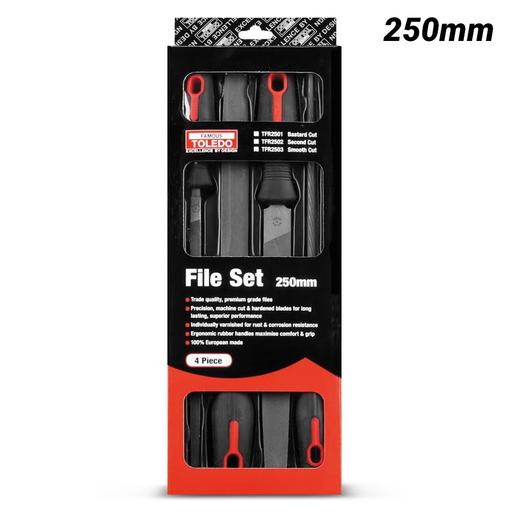
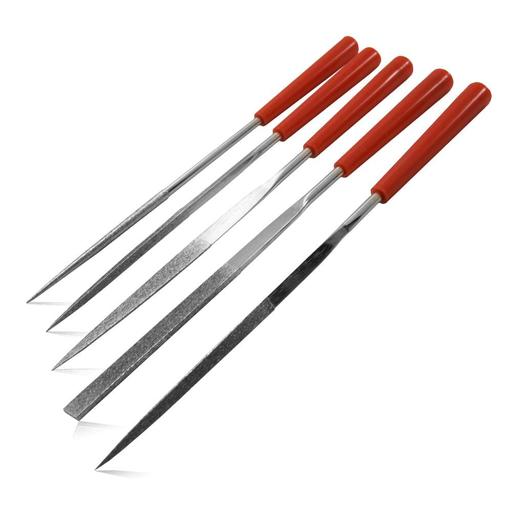
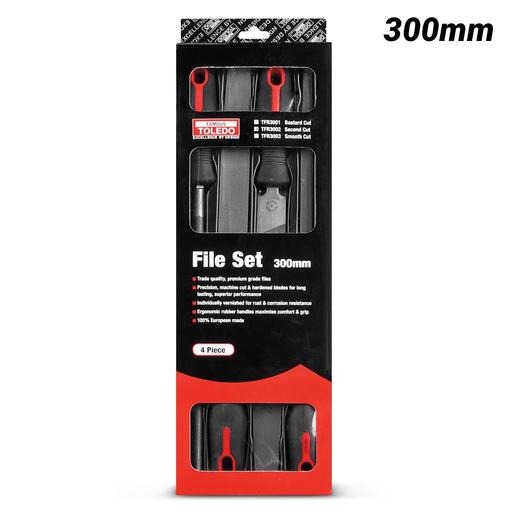

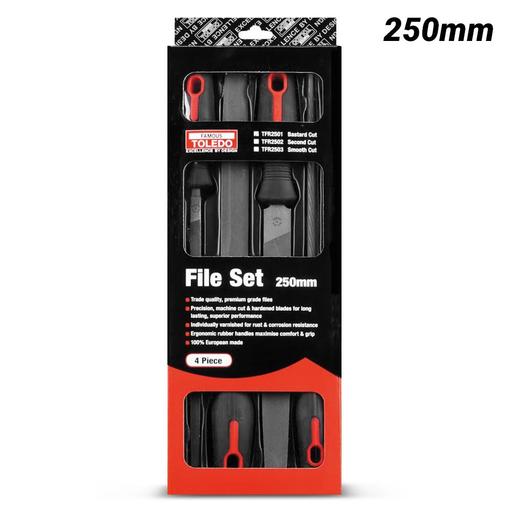
Why Quality Hand Files Are Important
Accuracy is important when repairing and assembling. With a quality set of hand files you can remove enough material to make things fit without compromising the strength of the part. File away burrs, seams in welds and out-of-square corners without filing away too much stock.
Power tools remove material quickly, but they are not always accurate in confined areas. A hand file set gives you a slower and more predictable approach. You maintain feel through your hands and can stop the moment the fit is correct. This is especially useful when working around mounting holes, brackets, threads, and mating surfaces.
Quality files help you:
- Refine surface finishes
- Adjust minor fitment issues
- Remove burrs safely
- Shape edges with accuracy
- Work in tight or delicate areas
They suit automotive repair, fabrication, restoration, and general workshop metalwork.
Key Design and Functional Attributes
File type and shape
Different shapes suit different jobs. Flat files work on broad surfaces. Round files open holes. Half-round files suit curved profiles. Triangular files reach into internal corners and slots.
Cut pattern
Single-cut files remove material smoothly and leave a finer finish. Double-cut files remove metal faster and suit heavier shaping tasks.
Abrasive grade
Coarse grades remove material quickly. Fine grades improve finish quality. Choosing the right grade affects both speed and accuracy.
Length and tang design
Longer files provide reach and smoother strokes. The tang allows a handle to be fitted for leverage and control.
Handle comfort
Comfortable handles matter during extended work. Better grip reduces fatigue and improves control while filing.
Selecting the correct shape and cut makes a noticeable difference to finish quality and access in confined areas. Files often complement other finishing tools such as thread restorer files, cleaning brushes, copper hand tools, or wedges & punches when preparing parts for assembly.
Safe Use and Ongoing Care Practices
Select the proper file for your task instead of trying to make one shape do all tasks. Use smooth forward pressure when stroking your file, but do not pull or drag the file backwards while it is under load. This will reduce gouging and maintain the teeth.
Brush away debris often with a file card or brush so the teeth can do their job. Do not use files on hardened or brittle surfaces as they will damage the teeth.
For longer life:
- Clean teeth during use to prevent clogging
- Store files in sleeves or racks to protect edges
- Inspect surfaces for wear or smooth spots
- Keep files dry and free of corrosion
Looking after files keeps them accurate and consistent over time.
Why Buy Hand Files from Sydney Tools
Sydney Tools offers a broad selection of hand files and hand file set options suited to automotive, workshop, and fabrication work. Different shapes, cuts, and lengths make it easier to match the tool to the task instead of adapting the task to the tool.
You get clear specifications, competitive pricing, and practical advice both online and in store. That helps you choose files that suit the materials and repairs you handle every day.
FAQs
When should I choose a single-cut file versus a double-cut file?
Single-cut suits finishing and smoothing. Double-cut suits faster material removal.
How does file shape affect confined spaces?
Narrow or shaped files reach areas flat files cannot, especially corners and internal profiles.
Can hand files deburr drilled holes safely?
Yes. A suitable file can remove burrs without damaging the surrounding surface.
How do I keep a consistent finish when filing?
Use steady strokes, even pressure, and check progress often rather than rushing.
How do I know a file is clogged?
If it slides without cutting or leaves scratches, the teeth are likely packed with debris.
Does abrasive grade affect finish quality?
Yes. Coarser grades remove metal quickly. Finer grades improve the final surface.
What handle features improve comfort?
Ergonomic grips and secure tang fitment reduce fatigue and improve control.
Can files be used on softer non-ferrous metals?
Yes, though regular cleaning helps prevent clogging.
How should files be stored?
Keep them separated in a rack or sleeve so the teeth do not contact each other.
What mistakes shorten file life?
Using excessive force, filing hardened materials, or storing files loose in a drawer.
Find the Right Hand Files Today
A good file gives you control where power tools cannot. Browse the range of hand files and hand file set options online or visit your nearest Sydney Tools store to choose shapes and cuts that suit your workshop work.


