
Login
Login
- Popular Categories
- Shop By Brand
- Tool Accessories
- Air Compressor
- Hand Tools
- Laser Levels
- Mechanical Workshop
- Pressure Washers
- Welding
- Chainsaws
- Lawn Mowers
- Whipper Snippers
- Categories
- Adhesives & Sealants
- Air Tools
- Diamond Tools
- Fans
- Fasteners
- Generators
- Ladders
- Lubricants & Chemicals
- Power Garden
- Safety Equipment
- Scaffold
- Silica Dust Solutions
- Storage
- Test - Measure - Locate
- Transportation & Lifting
- Vacuum & Dust Extractors
- Water Pumps
Hand Tools / Dewalt Hand Tools / Tape Measure
Tape Measures: Essential Tools for Accurate Measurement
Tape measures are indispensable instruments in various fields, including construction, carpentry, tailoring, and home improvement. They provide a convenient and reliable means of measuring length, width, height, and depth.

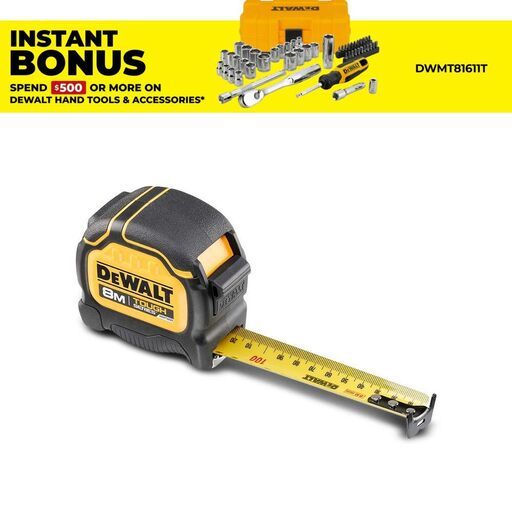
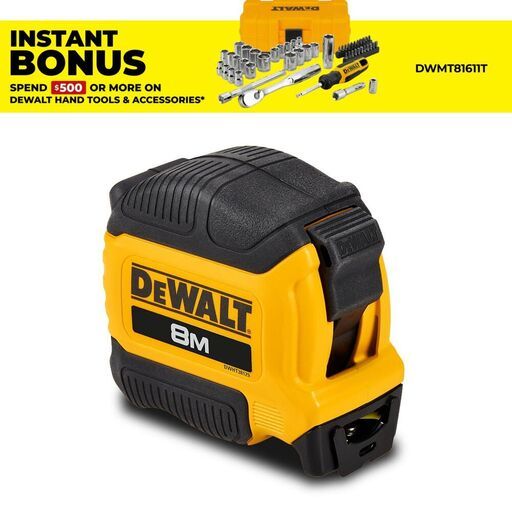
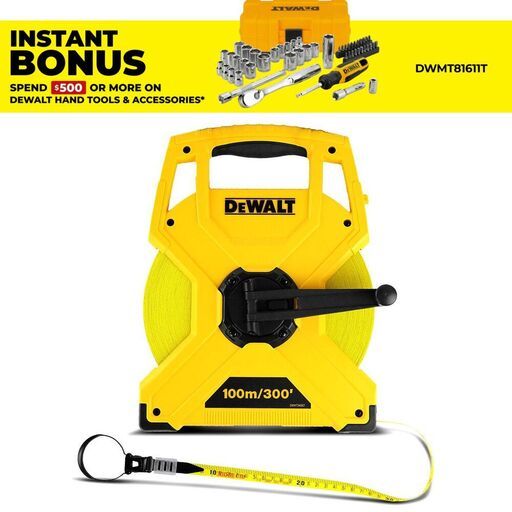

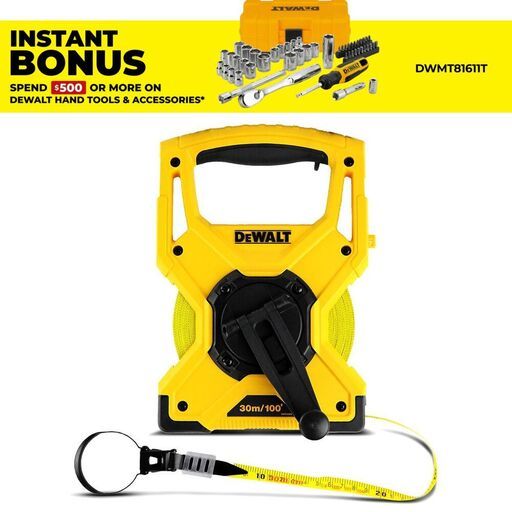
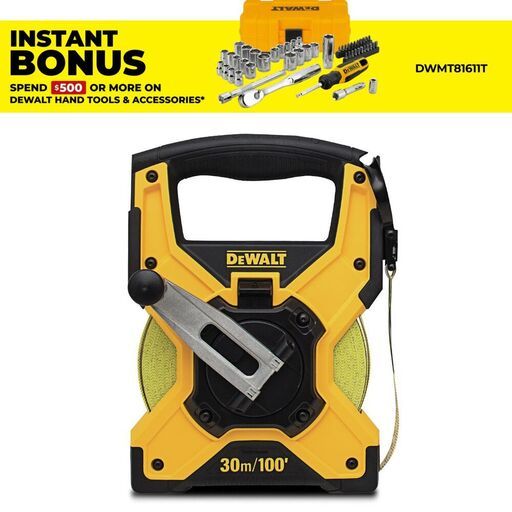
Types of Tape Measures:
Retractable (Spring Return) Tape Measures:
Description: These are compact, self-retracting tapes housed in a casing, making them portable and easy to use for general measuring tasks.
Applications: Ideal for everyday measurements in construction, carpentry, and DIY projects.
Long Tapes:
Description: Designed for measuring longer distances, these tapes can extend up to 100 meters or more and are typically made of fibreglass or steel.
Applications: Suitable for surveying, landscaping, and large-scale construction projects.
Sewing (Tailor's) Tape Measures:
Description: Flexible, often made of cloth or fibreglass, these tapes are used for measuring body dimensions or fabric.
Applications: Essential tools for tailoring, fashion design, and sewing.
Digital Tape Measures:
Description: Incorporate electronic components to provide digital readings, often with features like memory storage and laser measuring capabilities.
Applications: Useful in fields requiring precise measurements, such as interior design and real estate.
Specialty Tape Measures:
Description: Designed for specific tasks, such as measuring curved surfaces or depths, these tapes come with unique features tailored to particular applications.
Applications: Used in specialised fields like tailoring, construction, and engineering.
Choosing the Right Tape Measure:
- Length Requirements: Determine the maximum distance you'll need to measure to select a tape with appropriate length.
- Material and Durability: Consider the environment in which you'll be using the tape; for instance, fibreglass tapes are resistant to stretching and are suitable for outdoor use.
- Measurement Units: Decide whether you need a tape with metric (millimetres and centimetres) or imperial (inches and feet) units, or both.
- Locking Mechanism: A reliable lock ensures the tape stays extended during measurements, providing accuracy and ease of use.
Benefits of Using Quality Tape Measures:
- Accuracy: High-quality tapes provide precise measurements, essential for tasks requiring exactness.
- Durability: Robust construction ensures longevity, even with frequent use in demanding environments.
- Convenience: Features like self-retracting mechanisms, belt clips, and ergonomic designs enhance usability and portability.
Frequently Asked Questions (FAQs) about Tape Measures:
How do I read measurements on a tape measure?
Tape measures typically have markings indicating inches, feet, centimetres, and meters. Each small line represents a fraction of the main unit (e.g., 1/16 inch or 1 millimetre). The longer lines usually denote whole units or half units. Some tapes also have colour-coded sections or numbers to assist in quick readings.
Can I use a tape measure for measuring curved surfaces?
Yes, flexible tape measures, especially tailor's tapes, are designed to conform to curved surfaces, making them suitable for measuring around cylindrical objects or body contours.
How do I maintain my tape measure?
Keep the tape clean and free from debris. Avoid exposing it to harsh chemicals or extreme temperatures. Regularly check the blade for any signs of wear or damage. For retractable tapes, ensure the retraction mechanism is functioning smoothly.
Are digital tape measures more accurate than traditional ones?
Digital tape measures can offer high accuracy, especially for longer distances. However, for everyday tasks, traditional tape measures are generally sufficient. Digital models are beneficial when quick readings and additional features like memory storage are desired.
How do I choose between a steel and fibreglass tape measure?
Steel tape measures are durable and suitable for heavy-duty tasks but can be affected by rust. Fiberglass tapes are resistant to stretching and are ideal for outdoor use, as they are less likely to be damaged by moisture.
What does "Class II" mean on a tape measure?
"Class II" refers to the accuracy grade of the tape measure. Class II tapes are accurate to ±2.30mm over a 10-meter length, making them suitable for general-purpose measuring tasks.
Can I use a tape measure to measure height or width indirectly?
Yes, by measuring the distance from you to the object and the angle of elevation or depression, you can calculate the height or width using basic trigonometry. Some digital tape measures come with built-in calculators to assist with such measurements.
How do I prevent my tape measure from retracting too quickly?
Avoid pulling the tape out too forcefully. If the retraction speed is too fast, it may cause the tape to snap back, potentially damaging the casing or the tape itself. Some tapes have a retraction control feature to adjust the speed.
For a comprehensive selection of tape measures suitable for various applications, visit Sydney Tools in-store or explore our online range.


