
Login
Login
- Popular Categories
- Shop By Brand
- Tool Accessories
- Air Compressor
- Hand Tools
- Laser Levels
- Mechanical Workshop
- Pressure Washers
- Welding
- Chainsaws
- Lawn Mowers
- Whipper Snippers
- Categories
- Adhesives & Sealants
- Air Tools
- Diamond Tools
- Fans
- Fasteners
- Generators
- Ladders
- Lubricants & Chemicals
- Power Garden
- Safety Equipment
- Scaffold
- Silica Dust Solutions
- Storage
- Test - Measure - Locate
- Transportation & Lifting
- Vacuum & Dust Extractors
- Water Pumps
Tool Accessories / Milwaukee Tool Accessories / Auger Bits
Auger bits are essential tools designed for drilling deep, clean holes in wood, soil, and other materials. Their helical design allows for efficient removal of debris, making them ideal for tasks ranging from woodworking to landscaping.
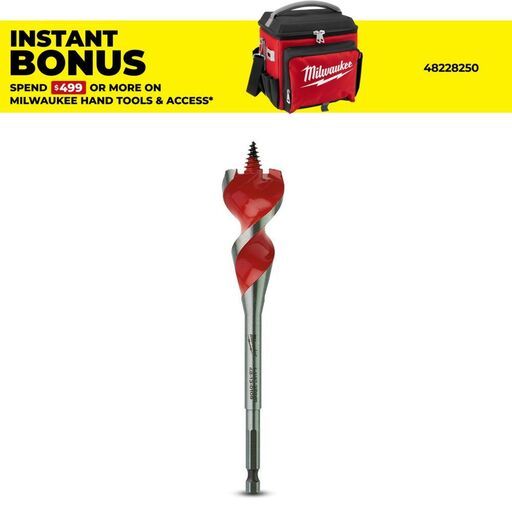

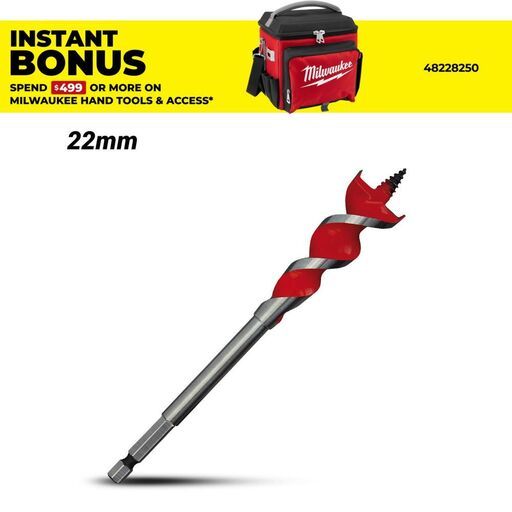
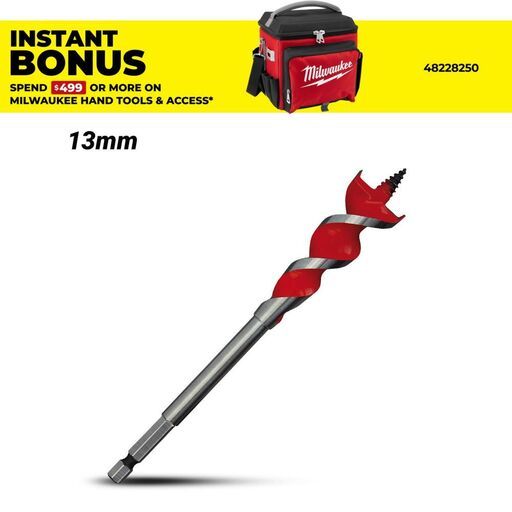


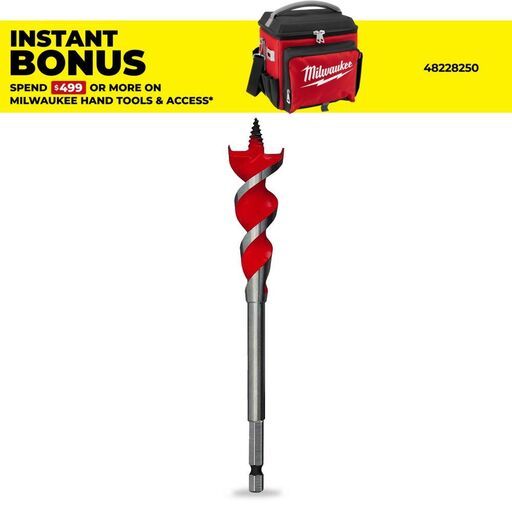
Types of Auger Bits
- Wood Boring Auger Bits
- Design: Features a spiral flute with a threaded tip for self-feeding.
- Use: Ideal for drilling deep holes in wood, such as for dowels or plumbing.
- Materials: Typically made from high-carbon steel or carbide-tipped for enhanced durability.
- Earth Auger Bits
- Design: Robust construction with a large spiral to move soil efficiently.
- Use: Designed for digging holes in soil, commonly used for fence posts, tree planting, and soil sampling.
- Materials: Often constructed from hardened steel to withstand the rigours of ground drilling.
- Carbide-Tipped Auger Bits
- Design: Standard auger bits with a carbide tip.
- Use: Suitable for drilling through wood that may contain nails or other hard materials.
- Materials: The carbide tip provides increased longevity and resistance to wear.
- Concrete Auger Bits
- Design: Similar to wood auger bits but with reinforced tips and flutes.
- Use: Designed for drilling into concrete or masonry, often used with hammer drills.
- Materials: Made from high-strength steel to handle the demands of masonry drilling.
- Hand Auger Bits
- Design: Manual tools with a T-handle for leverage.
- Use: Used for precise, controlled drilling in wood, often in carpentry or joinery.
- Materials: Typically made from high-carbon steel for sharpness and durability.
Applications of Auger Bits
- Woodworking: Creating deep, clean holes for dowels, plumbing, or electrical conduits.
- Landscaping: Digging holes for fence posts, tree planting, or soil sampling.
- Construction: Drilling into concrete or masonry for anchors, bolts, or pipes.
- DIY Projects: Ideal for precise drilling in various materials for home improvement tasks.
Maintenance Tips for Auger Bits
- Sharpening: Regularly sharpen the cutting edges using a fine file or sharpening stone to maintain efficiency.
- Cleaning: After use, clean the bit to remove debris and prevent rust.
- Storage: Store auger bits in a dry place to avoid corrosion.
- Inspection: Regularly check for signs of wear or damage, and replace bits as necessary to ensure safety and performance.
Frequently Asked Questions (FAQs)
Can auger bits be used for materials other than wood?
Yes, certain auger bits are designed for materials like concrete or metal. Ensure you select the appropriate bit for the material you're working with.
How do I choose the right size auger bit?
Select an auger bit with a diameter and length suitable for the hole size and depth required for your project.
Are there auger bits compatible with power drills?
Yes, many auger bits are designed to fit standard power drills. Check the shank type and size to ensure compatibility.
How can I extend the lifespan of my auger bits?
Proper maintenance, including regular sharpening, cleaning, and storing in a dry environment, can significantly extend the lifespan of your auger bits.
Can I use an auger bit for drilling into metal?
Standard auger bits are not suitable for metal. Use bits specifically designed for metal drilling to achieve optimal results.
For a comprehensive selection of auger bits, visit Sydney Tools online or in-store. Our expert team is here to assist you in selecting the ideal auger bit tailored to your needs.


